Paying for private lessons: in advance, per lesson or at the end of the month?
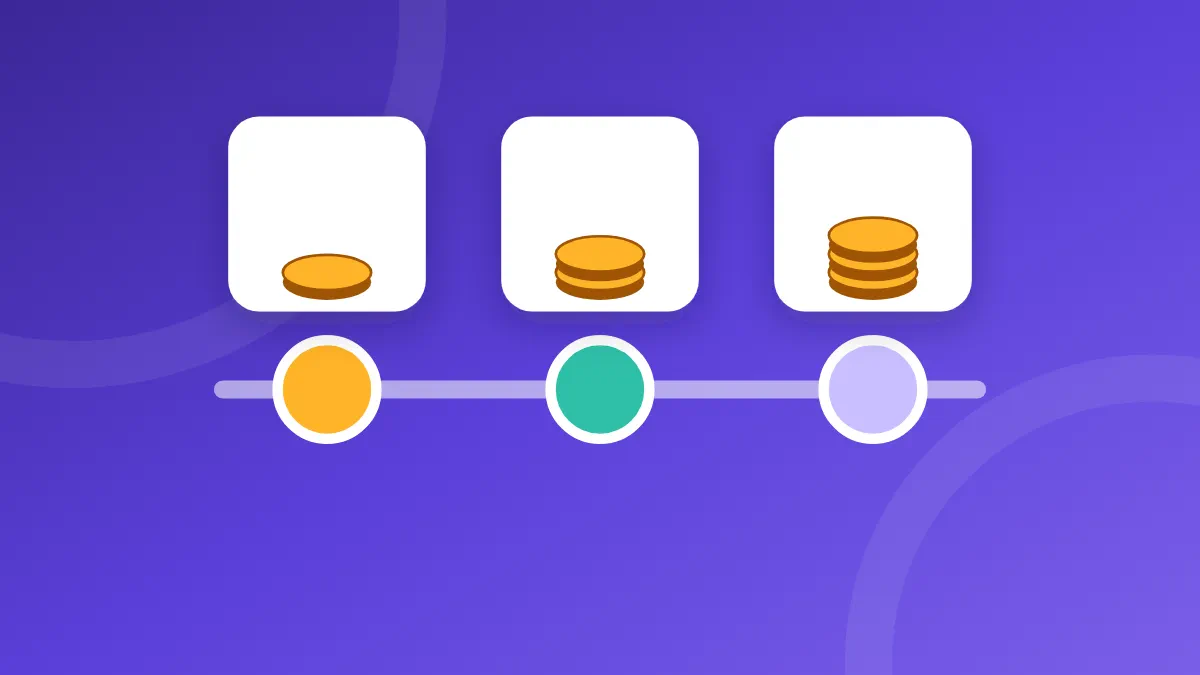
The short answer: there are three common methods, and each suits a different situation. Paying per lesson suits new students and occasional lessons. Paying at the end of the month is convenient for parents of regular students, but needs exact records and a reminder with a breakdown. Paying in advance or a lesson package prevents debts entirely and suits whoever comes every week. Many tutors combine them: per lesson at first, and after a month or two they move to a package or to the end of the month.
Paying per lesson
The parent, or the student, pays at the end of each lesson.
Advantages:
- No debt builds up, and no reminders are needed.
- Simple to understand: one lesson, one payment.
- Suits a new student, when it is not yet clear whether they will continue.
Disadvantages:
- At every lesson there is a moment of "wait, I'll transfer it to you". Sometimes the parent is not home, or the student forgot.
- Lots of small payments, and each one needs to be marked and have a receipt issued.
- A payment put off "until next time" is exactly how a debt starts.
Paying at the end of the month
At the end of each month the parent receives a breakdown of the lessons that took place and pays for all of them.
Advantages:
- Convenient for parents: one payment a month.
- Flexible: they pay only for lessons that took place, so there is no need for refunds or credits on cancellations.
Disadvantages:
- The tutor "finances" a month of lessons in advance.
- Everything depends on the record: a lesson that was not recorded will not be charged.
- It needs a fixed reminder, and sometimes a second one too.
The important rule: before asking for payment, send a breakdown. A list of lessons with a date and price for each, and a total. That way the parent sees exactly what they are paying for, and mistakes can be corrected before they turn into an argument. Ready-made wording for a monthly summary is in the full guide to collecting payment for private lessons.
Paying in advance and a lesson package
The parent pays in advance for a number of lessons, for example 4 or 8, and the lessons are "taken off" the package.
Advantages:
- No debt at all: the lessons are already paid.
- Commitment: a student who paid in advance tends to turn up.
- Fewer payments, fewer receipts, fewer reminders.
Disadvantages:
- You need clear rules: what happens on a cancellation, whether the package has an expiry, whether a lesson can be passed to a sibling.
- You need to track how many lessons were used and how many are left, and to say when the package is about to run out.
- Some parents do not like paying for lessons that have not yet taken place, especially at the start.
An example (the numbers are for illustration only): a package of 4 lessons for NIS 560, that is NIS 140 a lesson. How to price a package, whether to give a discount and what to write in the rules - in the article lesson packages: how to sell a prepaid package.
Which method suits whom
| Situation | Recommended method |
|---|---|
| A new student, a trial lesson | Per lesson |
| An occasional student, before a test | Per lesson |
| A regular student, a weekly lesson | A package or the end of the month |
| A parent who has already been late paying | In advance (a package) |
| Several siblings with the same tutor | The end of the month, with a breakdown for each child |
Moving between methods. You do not need to choose one method for all students. You can start a new student on paying per lesson, and after a month offer them a package. What matters is that every parent knows exactly which method they are on, and that the move is agreed in writing, including from when it applies.
If there is already a parent who is late paying, see a parent is not paying for private lessons? for an order of action.
Common payment methods
Private tutors in Israel usually receive payment in one of these ways: cash, bank transfer, or payment apps such as Bit and PayBox. Each way suits different families, and it is worth writing in the request message exactly how to pay (a phone number for the app, account details for a transfer). Check the fees and terms of each app directly with the app or the bank, because they change.
Two things worth knowing, whatever the method:
- A receipt for every payment. According to Kol Zchut, every business owner, exempt dealer or authorised dealer, must issue a receipt immediately on receiving payment (Kol Zchut, as of October 2026). With payment per lesson that means a receipt for each lesson. With a package or the end of the month - one receipt for each payment.
- Cash in large amounts. According to a Tax Authority directive on the law to reduce the use of cash, in a transaction where one side is a business and the price is above NIS 6,000, cash payment is allowed only up to 10% of the price or NIS 6,000, whichever is lower (as of October 2026). For single lessons it is irrelevant, but for a large package paid in advance it is worth paying attention.
On opening a tax file and what a private tutor needs to manage, see exempt dealer for a private tutor. For any question about your own case, check with an accountant.
How to record each method in Teaching
Parents do not pay through Teaching. The payment goes directly between you, and Teaching records what was paid, when, and what is still open.
Paying per lesson. You record the lesson in the recording screen, and the same day you go into "Collection", press "Mark payment" on the student's card, choose the lesson and press "Mark as paid". The payment date is recorded as the date of marking, so it is worth marking on the day you received the money.
The end of the month. You record every lesson as usual. At the end of the month, in the "Collection" screen there is a card for each student with a debt. A WhatsApp, SMS or email button opens a ready message with the list of unpaid lessons and the amount, and you press "send". When the parent pays, you mark the lessons in "Mark payment". In the "History" screen you can filter by month and see how much was paid and how much was not.
A package. Packages are part of the Studio module, which is off by default and turned on from settings. After turning it on, on the student's card (the "Classes" screen) there is an "Access" button, and there you create a package: a number of lessons and a price. When you mark it as paid, it covers the student's lessons from the day it was created onward, and the price is divided between the lessons exactly to the last agora. When one lesson is left, a note appears that the package is about to run out. The package appears as a row of its own in the student's history, and in the Excel export as a separate "packages" tab.
Frequently asked questions
Which is better: paying for private lessons in advance or at the end of the month?
Paying in advance (a lesson package) prevents debts and suits regular students. The end of the month is convenient for parents but needs exact records and a fixed reminder. Paying per lesson suits new or occasional students.
Does a private tutor have to give a receipt for a payment?
According to Kol Zchut, every business owner, exempt or authorised dealer, must issue a receipt immediately on receiving payment (as of October 2026). For questions about your own case, it is worth checking with an accountant.
Is there a limit on cash payment to a private tutor?
According to a Tax Authority directive (2024), in a transaction where one side is a business and the price is above NIS 6,000, cash payment is allowed only up to 10% of the price or NIS 6,000, whichever is lower. For single lessons it is almost irrelevant, but for a large package paid in advance it is worth checking.
Can parents pay me through Teaching?
No. Parents pay you directly, in the way you agreed. Teaching records what was paid and what was not, calculates the debt and prepares a reminder message.
Written by the Teaching team · Updated on 14 October 2026. The information on receipts and cash was checked against Kol Zchut and the Tax Authority in October 2026 and is not tax advice.
30 days free trial on the Pro plan, no credit card
Every method works, as long as you know at every moment who has paid. In Teaching you record a lesson, mark a payment and see a debt in one screen.
Sign up for freeSources
- Kol Zchut - issuing a tax invoice, a transaction invoice and a receipt (in Hebrew) (checked 14.10.2026)
- Tax Authority - directive 1/2024, the law to reduce the use of cash (in Hebrew) (checked 14.10.2026)
Collecting payment for private lessons: a guide to getting paid
Collecting payment for private lessons without awkwardness: record each lesson the same day, total each student's debt and send the parent a breakdown and amount.
A lesson cancelled after it was paid: how to give credit
Credit for a lesson cancelled after payment: when to credit, refund or set a make-up, and how to record it so no shekel is lost. With wording for parents.
WhatsApp payment reminder for parents: 6 ready-made messages
A WhatsApp payment reminder for parents without awkwardness: 6 messages to copy, from a first reminder to an accumulated debt, a simple schedule, and what not to write.